MOUNT VERNON — Mental health issues affect one in four people. Based on audience questions at a Thursday night forum, that statistic holds true locally.
The Rotary Club of Kokosing Valley coordinated a panel discussion on mental health held on April 18 at Central Ohio Technical Center. Roughly 30 people attended the event.
The goal: stop the stigma and start a conversation.
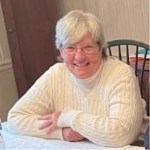
“The ostrich is saying ‘I don’t have an issue,’” RCKV President Jane Fricke said. “We’re all here to realize there is no stigma in asking for help. In fact, asking is the first step in recovery.”
“Mental health is something our community — or really across the country — we aren’t willing to talk about,” Knox County Health Commissioner Zach Green said. “It’s important to me and my colleagues to get out in front of this.”

Green noted that everyone has good and bad days.
“No one here is unaffected,” he said.
Stacy Gilley, behavioral health director at Knox Public Health, said the department grew by 450% in five years.
Gilley prefers to use the term emotional health rather than mental health.
“Mental health has stigma: Something is wrong with you,” she explained.
She noted that many people who have SUD and AUD (alcohol use disorder) have an underlying emotional health disorder.
“Acknowledging the individual things we fight creates perseverance.”
Zach Green, health commissioner
“Rarely do they not dance together,” she said.
Of increasing concern locally and nationally are the rising depression and suicides in those aged 60 and over. Suicides in this demographic increased by 40% over the last 10 years.
“Our staff are seeing this, and we’re working on providing more resources and getting them connected,” Gilley said.
The importance of self-care in mental health
Other mental health professionals joined Gilley in the panel discussion:
•Dr. KC Montoya, regional director of operations for ANEW
•Rochelle Burns, The Freedom Center
•Flint Postle, Riverside Recovery Services
•Palma Ashcraft, Behavioral Healthcare Partners

Regarding strategies to maintain good emotional health, Montoya said, “The people who are successful with their own emotional well-being are those who take care of themselves.”
He noted that taking two minutes daily to prioritize things you like is invaluable to self-care.
Postle noted it is about balancing social and physical health. If those get out of whack, your emotional health will also suffer.
“It’s finding those daily activities; it’s not just a lavender bath once a month,” he said.
The panelists’ self-care takes different forms, including hand-washing dishes, mowing the lawn, and going to the forest. And yes, for one panelist, a lavender bath.
Another aspect is setting healthy boundaries, such as not answering the phone after a certain time.
“Saying no when you need to say no is definitely part of self care,” Burns said.
Gilley added that adequate sleep is critical, too.

Panelists also discussed emerging trends and advancements in emotional health, the lack of counselors, pediatric/young youth care, the potential use of AI in treatment, strengthening families to cope, and trauma-informed care.
Fricke said the RCKV took on the role of promoting a conversation about mental health because Rotary’s international president lost a brother to suicide. No family member had an inkling anything was wrong.
“Conversation is the beginning of something changing,” Fricke said.
The club will continue the conversation at First Friday events. Members will provide a room where visitors can stop in and ask questions or pick up information.