
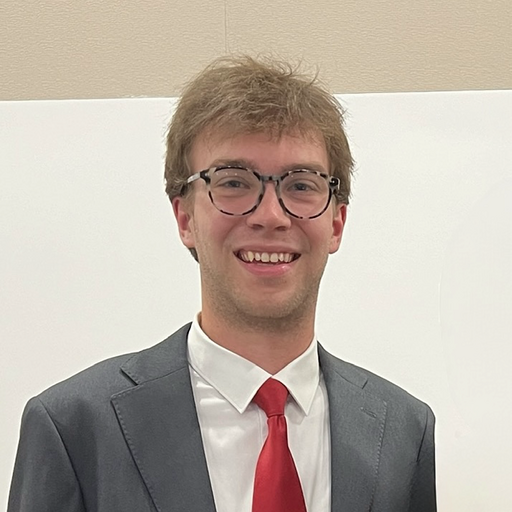

FREDERICKTOWN — Chief Scott Mast plans to retire from the Fredericktown Community Fire District on April 18, his 60th birthday, after 36 years of service.
For 20 of those years, Mast served as FCFD‘s chief, which is the longest chief tenure in FCFD history.
During his tenure, Mast responded to approximately 4,500 calls — also the most in FCFD’s history.
With Mast leading the way, FCFD has passed every levy the station ever put before voters and has been awarded approximately $500,000 in grant funding.
When 120 firefighters from 25 different fire departments responded to the Main Street fire in 2010, Mast commanded the first responders during the blaze.
The chief emotionally announced his upcoming retirement in front of his entire staff at FCFD’s awards banquet on Jan. 24, and later, wondered how he’d share the news with the rest of the community.
In an interview with Knox Pages, Mast opened up about his storied career; including the highs, the lows, the relationships and his experience overcoming mental health struggles, which he champions against today.
This story includes parts of Mast’s memoir The 7th Grader, which Knox Pages will publish on Feb. 1 at 5 p.m.
FCFD’s board accepted Mast’s retirement on Jan. 28 during its meeting and is actively searching for the station’s next chief.
The fire department encourages interested applicants to come to its station at 139 Columbus Road for more information.
The seventh grader who got it all started
When Mast was in seventh grade, his father was in a serious trucking accident. Ultimately, Mast credits the incident for making him want to be a firefighter.
“[My father’s] injuries were very significant and life-threatening,” Mast wrote in his memoir. “An off-duty firefighter happened to be fishing nearby. He heard the accident take place and came to render aid.
“Undoubtedly, his training, experience, quick actions and care were crucial in helping my dad survive the accident.”
Mast said he never got the chance to properly thank the off-duty hero, but from that day forward, he decided to pay back that firefighter’s efforts.
“I can confidently say that I achieved some part of that mission throughout my time in the fire service,” Mast’s memoir states.
“However, I have never felt that any of it would be considered by me as ‘debt paid in full.’
“There will always be the next emergency call that you can potentially make a life-or-death difference to.
“It isn’t a game of numbers and keeping track of the score. It is an ongoing conscious effort to be there when needed.”
The bonds formed along the way
Mast said the most positive thing to come from his career are the friendships.
“The people in this building are my friends, and my core group has been with me for 25 plus years because of this place,” he said.
“You really develop a bond, especially when you depend on each other for a lot of different factors down here.”
Mast recalled a specific “any of us would do anything for the other person” moment when his youngest son was three and ill around Christmas.
“The department rallied together to go shopping and provided the presents for my family,” he said.
“This alleviated a lot of pressure at the time and was, and actually still is, very sincerely appreciated. This is just a small aspect of the tremendous goodness that comes forth from the department.”
While the chief is confident those bonds will never fade, he does wonder what they’ll look like post retirement.
“That really is my biggest takeaway, just that tight bond that we’ve developed,” Mast said.
“It’s been so rewarding over the years and its going to be one of the major factors that I really miss.”
Hometown support
Born and raised in Fredericktown with generations of Freddies behind him, Mast has proudly called the community he serves home.
Yet, when Mast lived in Phoenix, Ariz., for two years, the strength of Fredericktown’s community became abundantly clear.
“I was pursuing getting on the fire department out there, but when I was doing my ride alongs and whatnot — it just wasn’t the same,” Mast said.
“It was going to be a job out there, still with the same goal.
“But, it just wasn’t the same as this volunteer, tight knit group of friends and community that has helped me and my family when my dad got hurt.”
With his memoir, Mast shared a list of community-oriented appreciations. Below is that list:
- The support of my family
- The community’s support in passing all of our fire levies
- FCFD firefighters’ willingness to adapt to changes and professionally serve the community
- FCFD firefighters’ family members supporting every staff member
- The relationships fostered with other fire departments and associated fire service personnel
- Mutual aid assistance from other fire departments
- My own mental health awareness and other firefighters’
“This is my hometown and its been good to me and my family,” Mast said.
“I just wanted to do what I could to pay it back and pay it forward.”
Finding the light at the end of a mental tunnel
Despite their best efforts and fictional depictions of them, firefighters and other first responders aren’t superhuman.
They are flesh and blood like the rest of us. They even think like us.
Throughout his career, Mast has seen some pretty dark stuff and has sacrificed a great deal to try and fix those dark things.
That takes a toll on a person and a toll on that person’s family.
In those somber moments, Mast thought he could be someone’s saving grace; thus, repaying his unspoken debt in one fell swoop and never missing another family event.
“It has always been about trying to prevent the next seventh grader from experiencing the heartache. Or the seventh grader after that, and the seventh grader after that, and so on,” Mast wrote in his memoir.
“I have ended up always wanting to try and ensure that the next seventh grader doesn’t have to encounter a tragic situation and the lifelong family-related consequences that accompany it. It became a never-ending cycle.”
While in that never-ending cycle, Mast gradually slipped into a mental hole of memory.
“You have the nightmares, the visions, you can’t sleep, can’t close your eyes and can’t open your eyes — it’s just always there. I had to get rid of that because it was brutal,” Mast said.
After forming a closer relationship with God and having his RN wife by his side, the chief eventually felt “reborn.”
“Once I took that first step and started down that path — the light starts coming back on. It’s almost like being born again, it really is life changing,” he said.
Additionally, the chief brought his wife, five children, grandsons and parents-in-law to the department’s recent awards banquet; an uncommon practice, he said.
“I wanted them to be there for my retirement announcement and memoir presentation. They were not aware of any of it beforehand,” Mast said.
“I wanted it to be a surprise and special moment for them.”
Midway through the chief’s memoir speech at the banquet he apologized to his entire family for the lost time and hugged them all tightly.
“It was a very meaningful and healing moment for me,” he said.
Ever since Mast clawed his way out of his own mental struggles, he honed in on helping his fellow firefighters avoid the same strife.
The chief said he encourages one-on-one and two-on-one conversations for smaller incidents when a single firefighter exhibits mental health issues.
But, when big incidents take place, bringing the entire staff together is important because he never wants people to feel alone in what they might be going through.
“Internally, it starts with one-on-one conversations, two-on-one conversations, just a small control group because it is a private thing,” Mast said.
“You want people to think you’re Superman and you don’t want people to realize that you’re not, it’s a pride thing.
“No one wants to be in that position in this business, it’s hard to get over that at times.
“Cutting a car open, we can do that. Putting out a fire, we can do that. We’re all trained for that. Recognizing and understanding this mental aspect, you can’t really train for that.
“I just want to give every dose of knowledge that I have to [other firefighters] and feed it to them these next couple months. If one little piece sticks, maybe that’ll help them at some point.”
Life after April 18
When someone does something for as long as Mast has been in fire service, things look a little different when that thing poofs away and is gone.
For Mast, he just wants to learn what normal life is again and “be grandpa.”
“Whatever normal means, I want to be normal. I don’t want to be sitting around with my grandsons here thinking ‘Oh man, I hope a run doesn’t come in right now,'” Mast said.
Like any good retirement, the chief just wants a slower-paced life and the ability to focus on his family again to make up for lost time.
“I can hopefully be present, not absent, for more things. My parents are getting up there in age and their years are limited,” Mast said.
“I’ve missed a lot of that time over the years, so I want to be here for my family.”
One thing the chief will undoubtably do in his retirement? Catch some Zs.
“I’m not sure I can say I’ve ever slept an entire night or an entire week. So, that’ll be cool,” Mast said.
Below is a photo gallery of images from FCFD’s awards banquet provided by Chief Mast.


