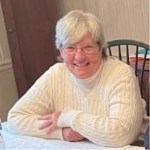
MOUNT VERNON — Knox County Commissioner Bill Pursel called out Commissioner Drenda Keesee on Thursday for her comments about transparency during the 2024 election campaign.
The catalyst was Keesee’s mention on Tuesday’s Radio Line broadcast of two campaign pledges: banning solar and transparency.
“During your campaign, you called out Commissioner Collier and Commissioner Bemiller and me about being transparent,” Pursel told Keesee. “I wasn’t able to say anything during the campaign, but I think you realized that your accusations and criticisms of the previous commissioners and how we functioned were not true.
“Actually, we had been transparent, we will continue to be transparent. Since you brought it up on Tuesday, I thought this is my time to address that.”
Pursel said that when Keesee criticized the commissioners’ office for lack of transparency, she was criticizing County Administrator Jason Booth and Clerk/Executive Assistant Penny Doyle.
“I think that was unfair of you to do that,” he told Keesee.
“I just want people to know in the community that Jason and his staff have never withheld, hid, or misled anybody at any time and never will.”
Pursel said people have bombarded the office with records requests since Keesee took office.
“That’s because of what you have brought to this office; people don’t see our office as transparent. I want to let the community know that we will continue to be transparent,” he said.
Pursel said Keesee’s accusation that Collier and Bemiller were not transparent was mudslinging, and should not have happened.
“We know because of how you’re not able to speak to stuff that that creates an issue of transparency,” he said. “I think that’s going to be an issue that’s not going away because you’re not able to answer some of this stuff.”
Keesee: transparency pledge a response to solar
Keesee responded that she and Commissioner Barry Lester campaigned on transparency because of the solar issue.
“The SB 52 issue going to commissioners, which Barry and I both campaigned on, that we would revisit SB 52 and ban future solar projects, that did bring a transparency issue because a lot of people felt like they weren’t able to talk to the commissioners at 10 a.m. about the solar debate. That was a huge debate in the community,” Keesee said.

She said the 19 townships that adopted solar exclusionary zone resolutions did not feel the commissioners were hearing them.
“We made a promise for transparency because SB 52 raised a real concern to the whole community that they were told that they would have a voice in solar, and they didn’t feel they had a voice. So that’s what we were trying to give them, Barry and I both.”
Many asked why the commissioners did not hold evening meetings.
“We did request before we got into the year to have an evening meeting so that people could attend that meeting,” Keesee said.
“We decided that because we were more administrative than legislative, by doing at least live streaming, people would have access to the information in the community.”
“I think it’s good for people to be involved and to know what’s happening in the discussions, so that’s why we went that way.”
Lester addresses Keesee’s issue with Faith Life Church
Lester said Keesee’s personal issue with Faith Life Church has changed his social activity throughout the county.
“People want know about your issue. I have no comment on the issue, but everybody wants to know,” he told Keesee.
“It’s not something we can talk about while they’re looking at it, but I get it,” Keesee said.
“I’m still fulfilling my duties, and I’m going to keep fulfilling my duties and do the very best I can.”
The difference between administrative and legislative
Booth said there is a distinct difference between an administrative and legislative role.
“[A] council is a legislative body and they can enact laws, and they can make ordinances. Commissioners can’t do that,” he said.
“Your role is to uphold state law. So you are an administrative body, as I think people have probably seen through our meetings this year.”
Booth noted that department heads update the commissioners on information in most meetings.
“It’s signing bills, transfers, contracts, bid openings, so the majority of those functions need to take place during county operations,” he said.
“Hopefully the public has seen through the meetings that that’s the bulk of what we are doing. Hopefully people have seen that [difference] as they watch: that what we do on a daily basis, it’s not really exciting.”
Booth pointed out that when the commissioners hold public hearings, they schedule one in the evening and one in the morning.
Lester said residents can always send a question to any of the commissioners.
“We can address those questions if you can’t attend the meeting, so it’s not like questions can’t be answered,” he said.
“Commissioner Pursel, the [board] president, always talks to the commissioners when we receive an email, gets our opinion, and then responds. If he’s not available, one of us will respond.
“But it is a joint effort when it comes to responding to these emails or questions. So if you are watching or going to view this at a later day, just because you can’t attend the scheduled meeting doesn’t mean your questions can’t be brought forward and answered.”